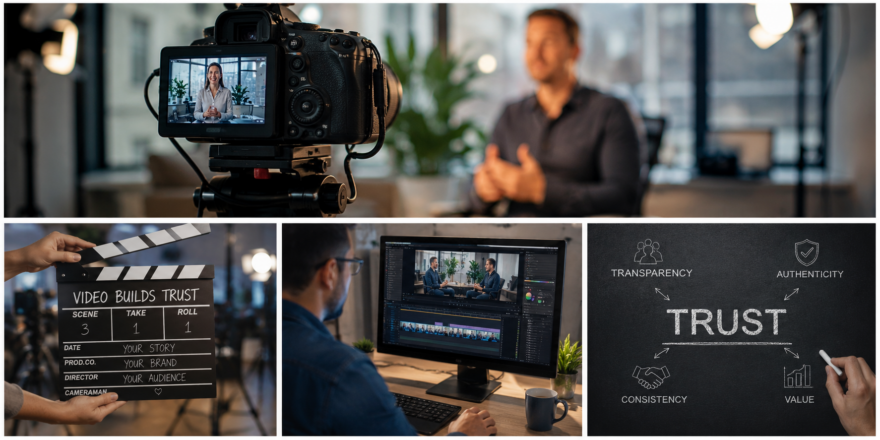


Artificial intelligence is no longer a future concept for creative and media agencies. It is already changing how agencies research, plan, create, edit and deliver their work.
For smaller and independent agencies in particular, AI has the potential to change the competitive landscape. Tasks that once required significant time and resources can increasingly be supported by intelligent tools, allowing smaller teams to concentrate more of their attention on strategy, creativity and client relationships.
But this does not necessarily mean replacing people. The more interesting question is how agencies can combine technology with human experience and judgement.
From automation to augmentation
The UK creative industries are already adopting AI faster than the wider economy.
According to the UK Government’s 2026 AI Adoption Plan for the Creative Industries, 51% of creative businesses report using AI, compared with 33% of businesses across the economy.
The report advocates what it describes as an “augmentation-first” approach: using AI to strengthen human creativity and productivity rather than simply replacing creative professionals.
This distinction is particularly important for agencies.
AI can support research, initial concepts, planning, transcription, content adaptation, administrative processes and elements of post-production. Used effectively, this can reduce the amount of time professionals spend on repetitive tasks.
The value of an agency, however, goes far beyond completing those tasks.
Understanding a client’s organisation, recognising what should — and should not — be communicated, developing the right creative direction and managing relationships still require professional judgement.
Smaller agencies can become more capable
One of the most significant effects of AI may be the ability of smaller agencies to increase their capabilities without building much larger teams.
A small media company can now access sophisticated tools for research, production, editing, analytics, content development and workflow management that would previously have required considerably greater resources.
Adobe’s research into the future of creative work also suggests that AI is increasingly becoming part of everyday creative workflows. Its 2026 research found that creative professionals are particularly integrating AI into areas such as brainstorming and ideation.
Adobe – The Future of Creative Work
This could create an important opportunity for independent agencies: remaining flexible and personal while gaining some of the production capabilities previously associated with much larger organisations.
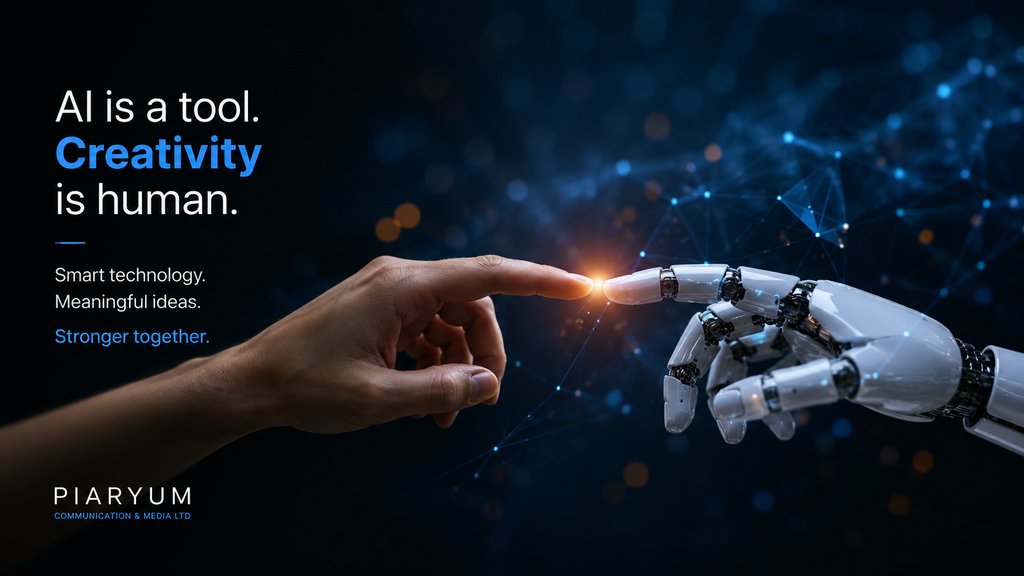
The agency business model is changing too
AI is not only changing how content is produced. It is beginning to affect the economics of advertising and communications.
McKinsey’s research into the emerging AI-driven advertising economy found that three-quarters of advertising leaders surveyed expected AI to increase total media spending, while around one-third expected it to improve return on advertising spend by at least 10%.
McKinsey – The Agentic Advertising Economy
For agencies, this suggests that clients may increasingly expect more measurable results, faster delivery and greater efficiency.
The traditional model of charging primarily for the amount of human time required to produce something may therefore come under pressure.
Increasingly, the value of an agency may lie in knowing what to create, why to create it, how to use technology effectively and how to turn communication into a business result.
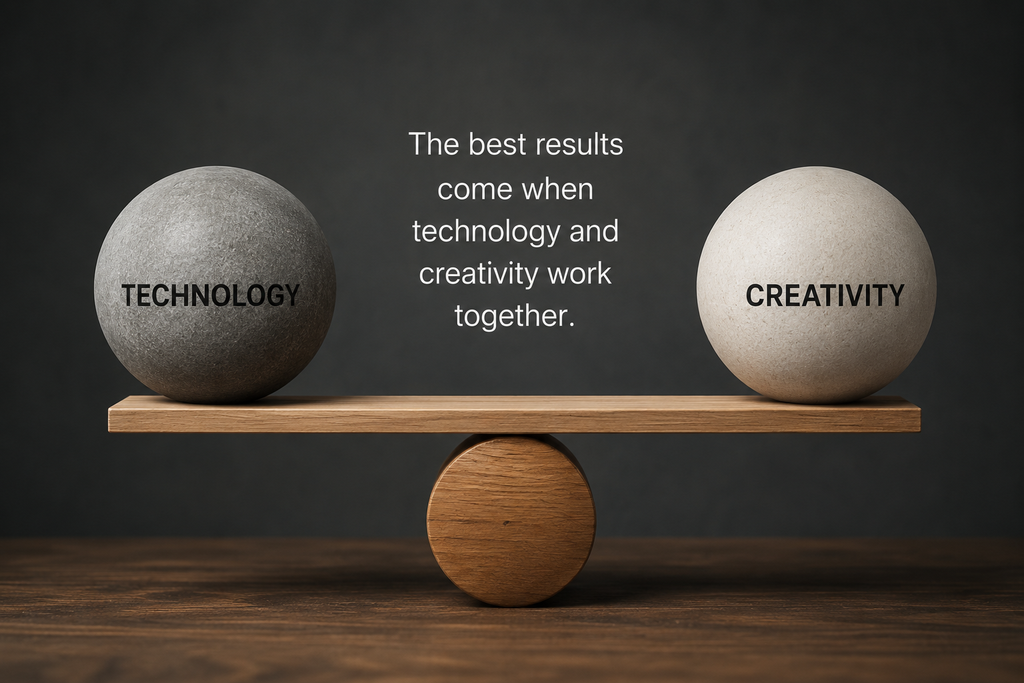
More content does not automatically mean better communication
AI dramatically increases the amount of content that businesses can produce.
That creates an interesting contradiction.
When everyone can produce more text, images and video, simply producing content becomes less valuable. Credibility, originality, judgement and trust become more important.
This is particularly relevant in corporate communication, interviews, events and professional video production.
A camera can record a person. AI can edit the footage. Software can generate captions, translations and different versions for multiple platforms.
But technology does not automatically understand the relationship between an organisation and its audience.
That remains a communication challenge.
Human direction becomes more important, not less
AI therefore changes the role of creative professionals rather than simply eliminating it.
Creative teams increasingly need to decide where automation makes sense and where human involvement creates value.
There are also important questions around copyright, intellectual property, confidentiality, accuracy and transparency. The UK Government’s Creative Industries AI Adoption Plan specifically identifies intellectual property, data security, client acceptance and reputational risk as important considerations for businesses adopting AI.
For agencies working with clients, responsible AI use therefore needs to become part of professional practice.
How we see AI at Piaryum
At Piaryum Communication & Media Ltd, we see AI as another stage in the evolution of the media and communications industry.
We are increasingly integrating appropriate AI-assisted and digital tools into areas such as research, planning, content development, production and post-production workflows.
The objective is not to replace professional experience or creativity.
It is to remove unnecessary processes, work more efficiently and create more time for the areas where people make the greatest difference: ideas, creative direction, storytelling, relationships and understanding the client.
The agencies that succeed in the next phase of the industry may therefore not be those that use the most AI.
They may be those that understand where AI adds value — and where humans still add more.